
Well+
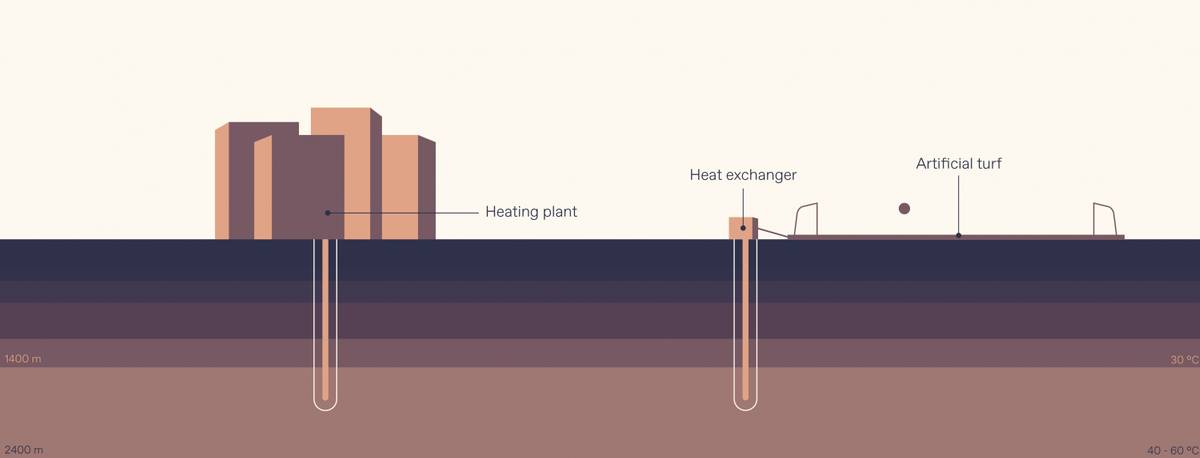
Well+ systems are typically drilled down to approximately 1,000-3,000 meters deep which is classified as a medium-deep well system. The system can be used directly in systems that operate with a lower temperature use cases like airports (outside areas), sports arenas and sidewalks etc. whereby the systems generate direct heat (“DH”) delivered directly to distribution layouts, or alternatively applying HPs where the temperature are increased before distributed to use cases like airports (inside areas), office buildings and hospitals etc. The cost of operation for direct systems is very low since the users don’t have to pay for distribution networks, only for the cost of the energy produced
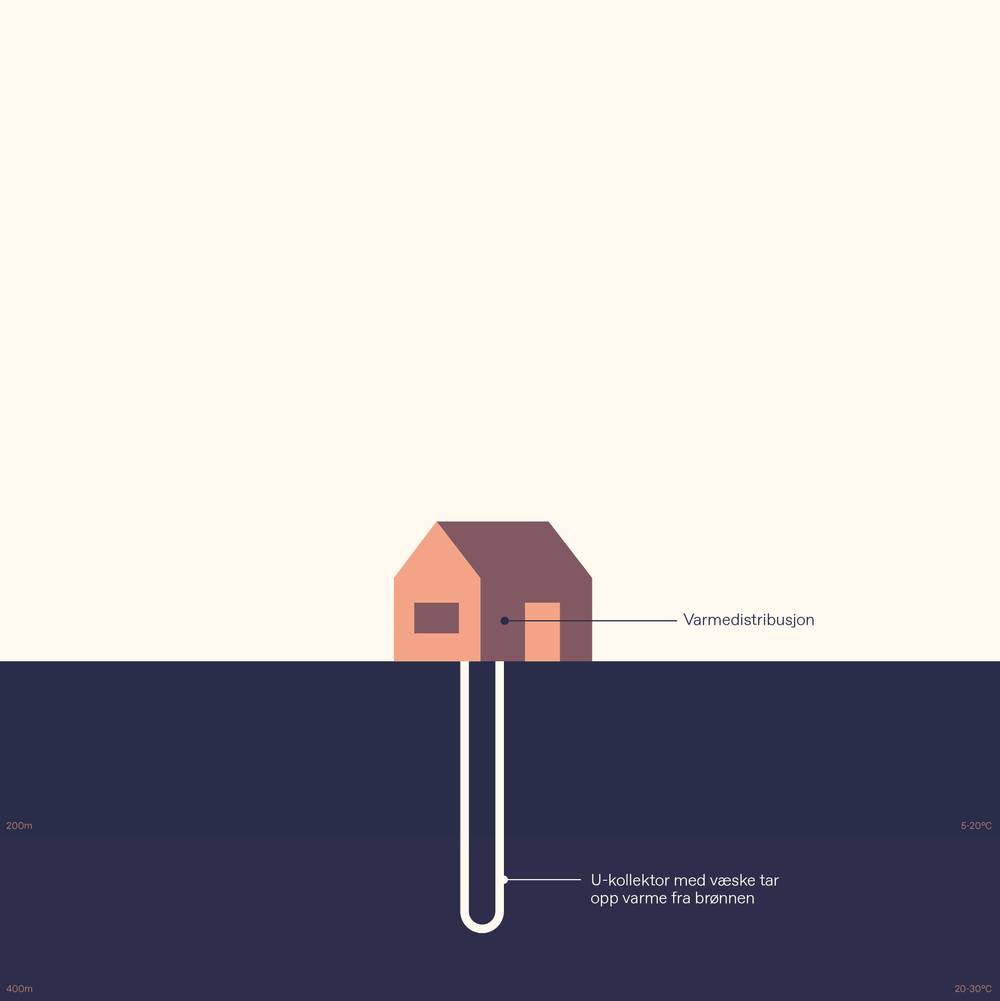
GeoWells systems are typically drilled down to approximately 200-400 meters depth, absorbing heat from the ground in winter to warm a building and dissipating heat into the ground in summer to cool it. This process uses ground-source heat pumps (“HP”) to efficiently manage a building's thermal energy, acting as a "thermal battery" to provide a low-carbon and renewable energy source
Well++
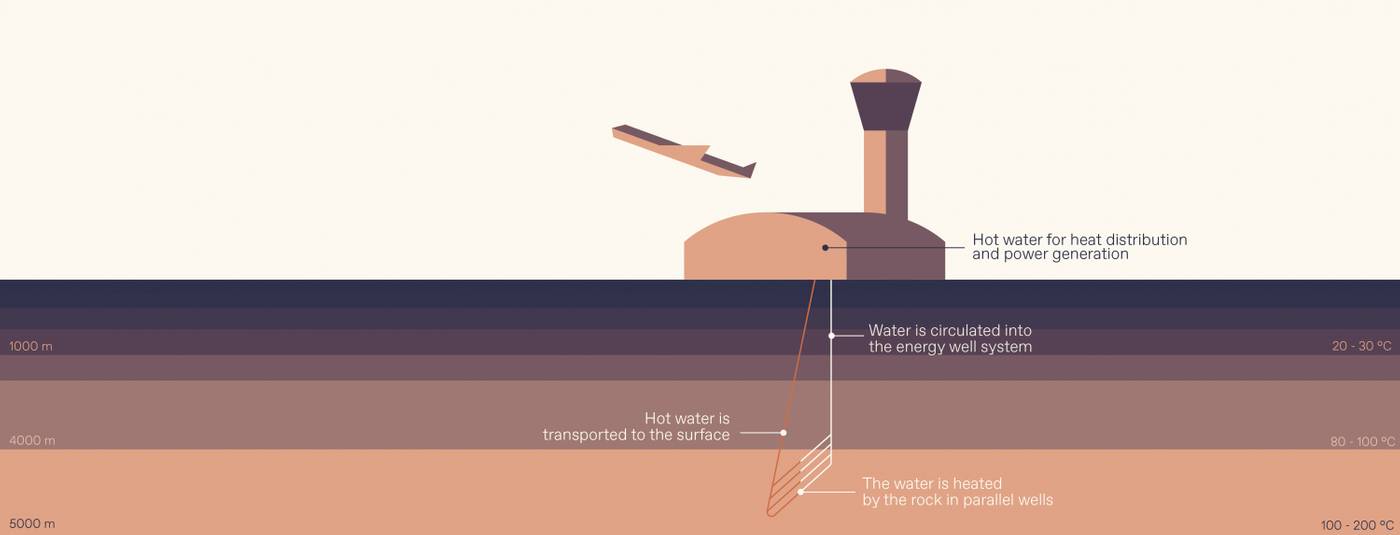
Well++ systems are typically drilled down to 4,000-6,000 meters depth. Well++ systems provide even higher temperatures than the Well+ systems, enabling electricity production, ideaelly compined with heat production, in so-called combined heat and power systems (“CHP”).
As the production well reaches a greater depth, multiple branch wells/laterals can be drilled in a 3D format feeding the same production well with heat. These branch wells/laterals increase efficiency and lower operating costs for the entire system, since only single production well will capitalise on the energy production in all the branch wells. The Well++ systems are applicable to larger plants and infrastructure projects, like airports, larger industries and district heating systems. The plants deliver in the range of 2 MW to 50 MW CHP and are suitable to be built in modules so that capacity can be added as demand increase. The operational costs.